The basic difference
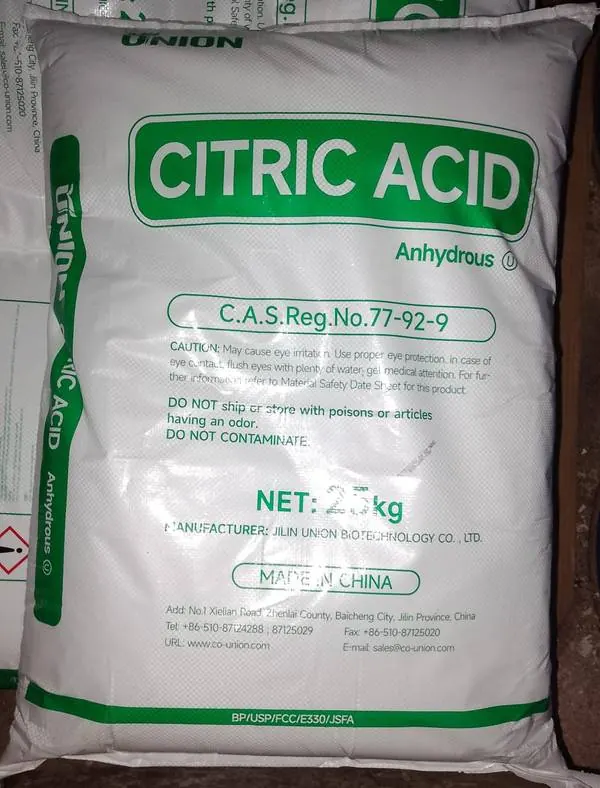
Citric acid anhydrous (C₆H₈O₇, molar mass about 192.1 g/mol) contains no water of crystallisation. Citric acid monohydrate (C₆H₈O₇·H₂O, about 210.1 g/mol) carries one water molecule per citric acid molecule, which is roughly 8.6% of its weight. CAS number 77-92-9 is the one printed on our anhydrous bags.
Swapping one for the other
Because the monohydrate includes water, you need slightly more of it to deliver the same amount of citric acid. As a rule of thumb, 1 kg of anhydrous corresponds to about 1.09 kg of monohydrate. Check your recipe or formulation before you substitute, and run a small trial.
Where each tends to be used
- Anhydrous is common in dry blends — drink powders, effervescent mixes, dry detergent formulations — where extra moisture could cause caking.
- Monohydrate is common where the acid will be dissolved straight into water or liquid products.
- Both serve as acidulants (E330), pH adjusters and chelating agents in food, detergents, cleaners and personal-care products.
Reading the marking on a bag
Our Union 25 kg bags are marked BP / USP / FCC / E330 / JSFA. Those abbreviations refer to the British Pharmacopoeia, the United States Pharmacopeia, the Food Chemicals Codex, the European food-additive number for citric acid and the Japanese food-additive standards. A marking tells you the standards the product is made to; if you need documentation for your own customers or auditors, ask us what is available for your lot.
Storage
Anhydrous citric acid can pick up moisture and cake in humid conditions. Keep bags sealed, dry and away from strongly scented goods, as the bag itself advises. Citric acid can irritate the eyes: wear eye protection when handling.
Not sure which form your process needs? Tell us the application on WhatsApp and we will help.
Tell us what you are making and we will help you pick the right product.