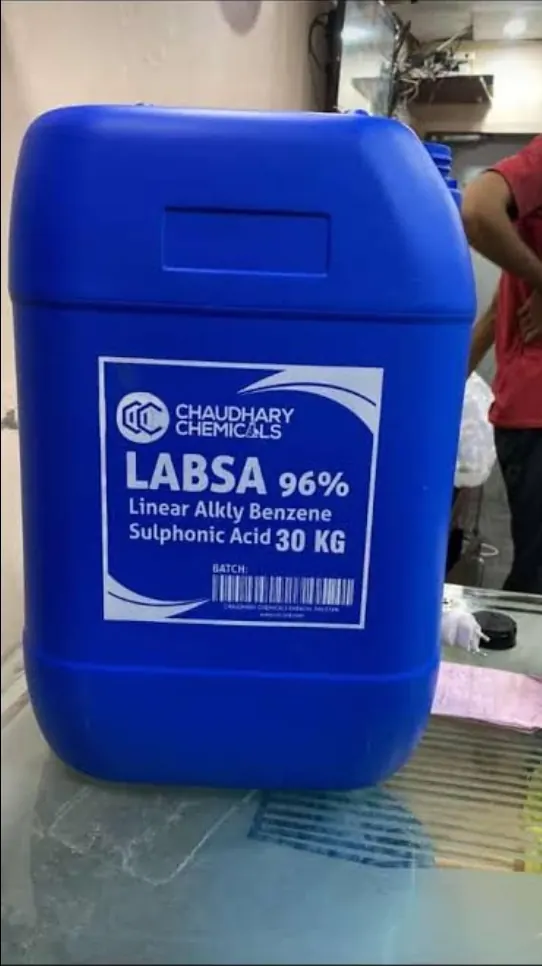
What LABSA is
LABSA stands for linear alkyl benzene sulphonic acid. It is a viscous, dark brown acid liquid and the acid form of the anionic surfactant used in most washing powders, dishwashing liquids and household cleaners. In Pakistan it is often just called “sulphonic acid”. Our LABSA listing is a Chaudhary Chemicals product, made in Pakistan.
How detergent makers use it
LABSA itself is not the finished surfactant. It is neutralised with an alkali — typically sodium hydroxide or soda ash — to produce sodium linear alkylbenzene sulphonate, which is then blended into the detergent. Neutralisation releases heat, so add the acid slowly to the alkaline solution with stirring and cooling.
What to check before you buy
- Active matter. This is the key specification. The packs we photographed are labelled differently: a 30 kg can marked “LABSA 96%” and a 218 kg drum marked “LABSA max 90%”. Labels can differ by pack size and lot, so always confirm the figure for the pack you are buying.
- Pack size. Cans suit small batches; drums suit regular production.
- Container compatibility. Avoid mild steel and aluminium. Plastic such as HDPE and suitable stainless steel are typical choices.
Safety basics
LABSA is a corrosive acid. Wear chemical-resistant gloves, goggles and an apron, keep eyewash and water available, and store it away from alkalis, oxidisers and food. Follow the producer’s safety data sheet for your lot.
Related products
Detergent and cleaning formulators often buy citric acid for pH control and metal-ion binding alongside LABSA. Tell us your formulation on WhatsApp and we will help you list what you need.
Tell us what you are making and we will help you pick the right product.